Optimised Marketing
SEO

Free Meta Description Length Checker: Optimise Your Snippets for More Clicks

Meta descriptions are your first impression in Google search results. Learn the optimal length, what to include, and how our free checker helps you write snippets that get clicked.
Optimised Marketing Team
Published 5 May 2026
7 min read
9 views
Free Meta Description Length Checker: Optimise Your Snippets for More Clicks
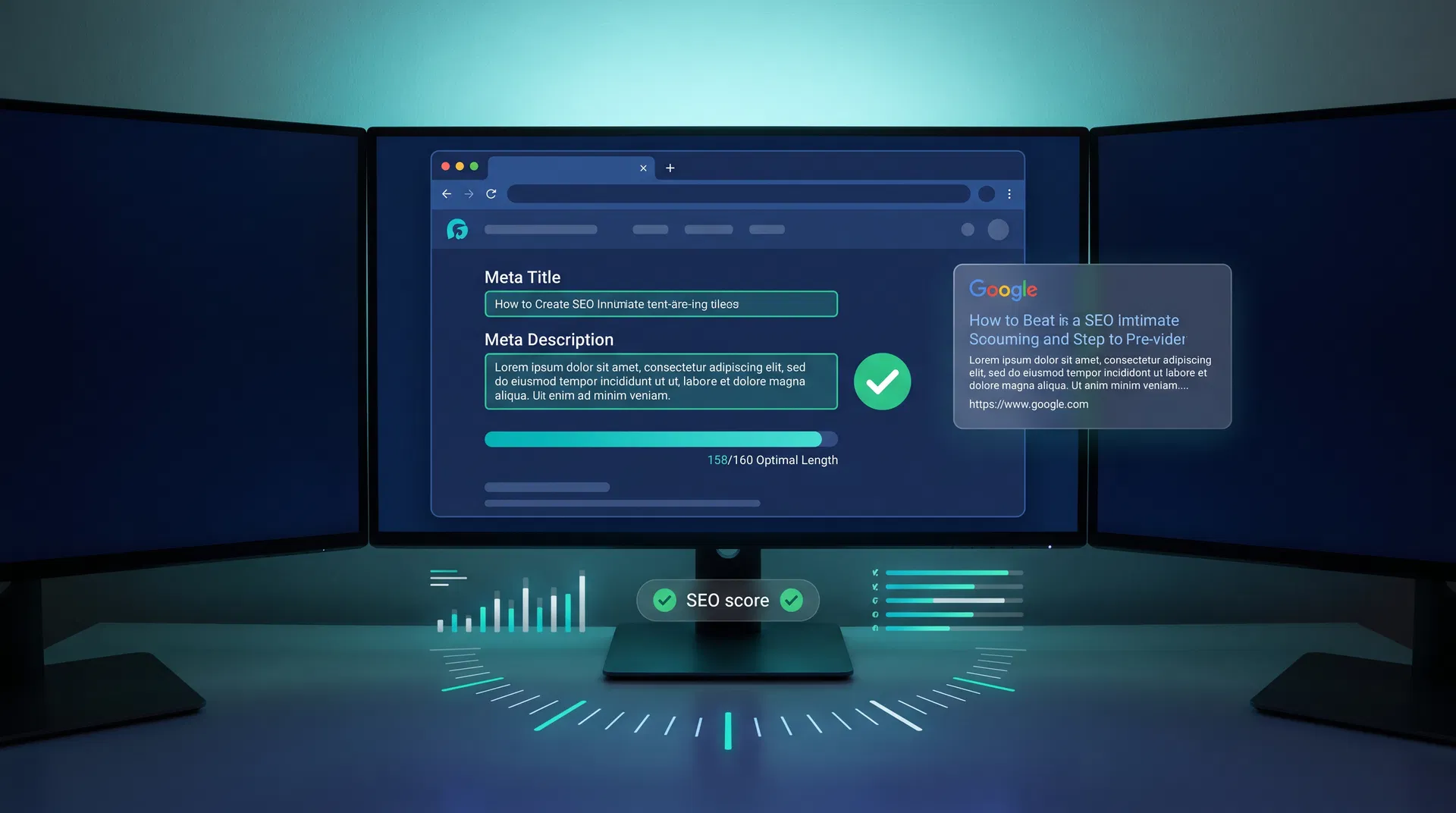
<article class="blog-content"> <p class="lead">Your meta title and description are your advertisement in Google search results. Before a user ever visits your website, they read your snippet and decide whether to click. Getting this right — the right length, the right message, the right keywords — can dramatically improve your click-through rate and drive more organic traffic without changing your rankings at all.</p> <p>Our <a href="/ai-tools/seo/meta-counter">free meta description length checker</a> gives you instant feedback on whether your meta tags are the right length to display correctly in Google, helping you craft snippets that get clicked.</p> <h2>What Are Meta Titles and Descriptions?</h2> <p>Meta titles (also called title tags) and meta descriptions are HTML elements that appear in the <code>&lt;head&gt;</code> section of your webpage. They don't appear on the page itself, but they're displayed by search engines in their results pages (SERPs).</p> <p>The <strong>meta title</strong> appears as the blue clickable headline in search results. It's also displayed in browser tabs and when pages are shared on social media. It's one of the most important on-page SEO factors.</p> <p>The <strong>meta description</strong> appears as the grey text beneath the title in search results. While it's not a direct ranking factor, it significantly influences click-through rate — which does affect your rankings indirectly.</p> <h2>Optimal Meta Tag Lengths</h2> <p>Google doesn't measure meta tag length in characters — it measures in pixels, because different characters take up different amounts of horizontal space. However, character counts provide a useful approximation:</p> <table> <thead> <tr><th>Element</th><th>Recommended Length</th><th>Maximum Before Truncation</th></tr> </thead> <tbody> <tr><td><strong>Meta Title</strong></td><td>50–60 characters</td><td>~60 characters (580px)</td></tr> <tr><td><strong>Meta Description</strong></td><td>120–158 characters</td><td>~158 characters (920px)</td></tr> </tbody> </table> <p>If your meta title or description exceeds these limits, Google will truncate it with an ellipsis (...), cutting off your message mid-sentence. Our <a href="/ai-tools/seo/meta-counter">meta counter tool</a> shows you exactly how many characters you've used and whether your text will be truncated.</p> <h2>How to Write Effective Meta Titles</h2> <h3>Include Your Primary Keyword</h3> <p>Your primary keyword should appear in your meta title, ideally near the beginning. Google bolds keywords in search results that match the user's query, making your result more visually prominent and signalling relevance.</p> <h3>Include Your Brand Name</h3> <p>For most pages, include your brand name at the end of the meta title, separated by a pipe or dash: "Free QR Code Generator | Optimised Marketing". This builds brand recognition and helps users identify your site in results.</p> <h3>Make It Compelling</h3> <p>Your meta title is competing with nine other results on the page. Use power words, numbers, and clear value propositions to make your result stand out. "Free", "Guide", "How to", and specific numbers (e.g., "7 Ways to...") consistently improve click-through rates.</p> <h3>Avoid Keyword Stuffing</h3> <p>Don't cram multiple keywords into your meta title at the expense of readability. Google may rewrite titles it considers over-optimised, and users are less likely to click on titles that read like a keyword list rather than a clear proposition.</p> <h2>How to Write Effective Meta Descriptions</h2> <h3>Summarise the Page's Value</h3> <p>Your meta description should clearly answer the question "why should I click this result?" Focus on the specific benefit the user will get from visiting your page, not a generic description of what the page contains.</p> <h3>Include a Call to Action</h3> <p>End your meta description with a clear call to action: "Learn more", "Try it free", "Get your free audit", "See how it works". This increases the likelihood of a click by giving users a clear next step.</p> <h3>Include Secondary Keywords Naturally</h3> <p>While meta descriptions aren't a direct ranking factor, including relevant keywords helps Google bold them in results when they match the user's query, making your snippet more visually prominent. Include keywords naturally — don't force them in at the expense of readability.</p> <h3>Be Specific, Not Generic</h3> <p>Avoid generic descriptions like "Welcome to our website. We offer a range of services." Every word in your meta description should earn its place by communicating specific value. Compare "We offer digital marketing services" with "AI-powered SEO and paid advertising that generates measurable ROI for UK businesses" — the second is far more compelling.</p> <h2>When Google Rewrites Your Meta Description</h2> <p>Google doesn't always use the meta description you've written. When Google determines that a different snippet from your page better answers the user's specific query, it will generate its own description. This is normal and not something to worry about — it happens on roughly 60–70% of searches according to various studies.</p> <p>The best way to minimise unwanted rewrites is to write clear, comprehensive meta descriptions that accurately summarise your page content. Google is more likely to use your description when it closely matches what users searching for your target keywords are looking for.</p> <h2>Frequently Asked Questions</h2> <h3>Does meta description length affect rankings?</h3> <p>Meta descriptions are not a direct ranking factor. However, they significantly affect click-through rate, which does influence rankings indirectly. A compelling meta description that earns more clicks signals to Google that your result is relevant and valuable.</p> <h3>What happens if my meta description is too long?</h3> <p>Google will truncate it with an ellipsis (...) at approximately 158 characters. This cuts off your message and may make your snippet look incomplete. Our <a href="/ai-tools/seo/meta-counter">meta counter</a> shows you exactly where the truncation point is.</p> <h3>Should every page have a unique meta description?</h3> <p>Yes. Duplicate meta descriptions across multiple pages are a missed opportunity and can confuse Google about which page to show for a given query. Every page should have a unique, page-specific meta description.</p> <h2>Check Your Meta Tags Now</h2> <p>Make sure your meta titles and descriptions are the right length and compelling enough to earn clicks.</p> <p><a href="/ai-tools/seo/meta-counter" class="cta-link"><strong>→ Use the Free Meta Description Length Checker</strong></a></p> <p>Pair this with our <a href="/ai-tools/seo/serp-preview">free SERP preview tool</a> to see exactly how your snippet will look in Google search results before you publish.</p> </article>

Free Tools to Try

Put these strategies into action — no sign-up required

All tools

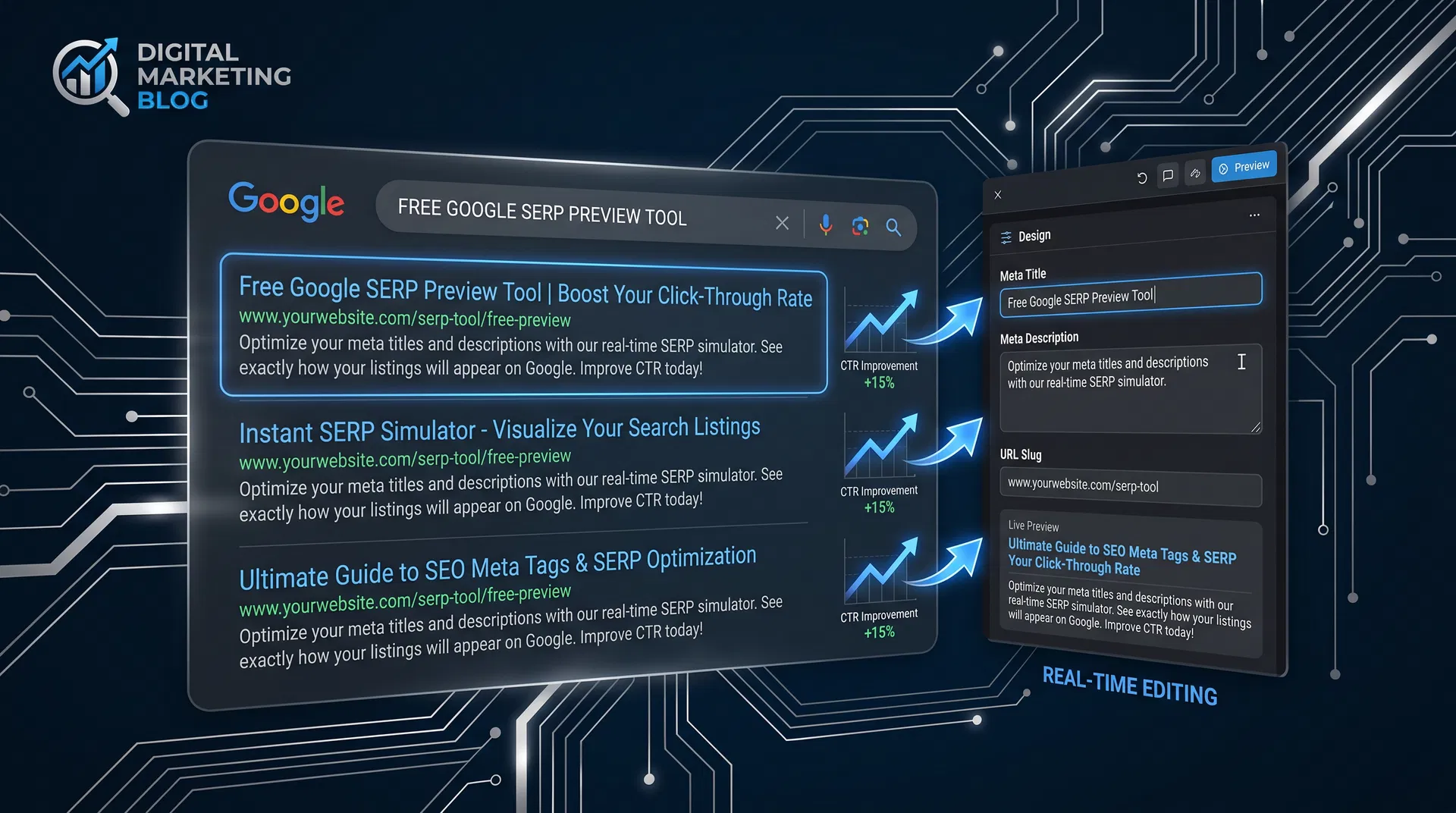
Want to learn more? Read the Free SERP Preview guide.

Related Articles

View all
Lee Evans

Optimised Marketing Team

AI Marketing Expert

Lee Evans is the founder of Optimised Marketing, a UK-based AI-first digital marketing agency. With over a decade of experience in SEO, PPC, and marketing automation, Lee specialises in combining AI tools with human strategy to deliver measurable results for businesses of all sizes. He has helped 100+ companies improve their online visibility and generate qualified leads through data-driven marketing.

Free AI Consultation

Ready to Transform Your Marketing with AI?

Book a free, no-obligation consultation with our AI marketing experts. We'll analyse your current marketing, identify opportunities, and show you exactly how AI can accelerate your growth.

No sales pressure. No commitment. Just actionable insights you can use immediately.